THSE Pricing Series - Part 3: Discounting Without Damaging Your Brand
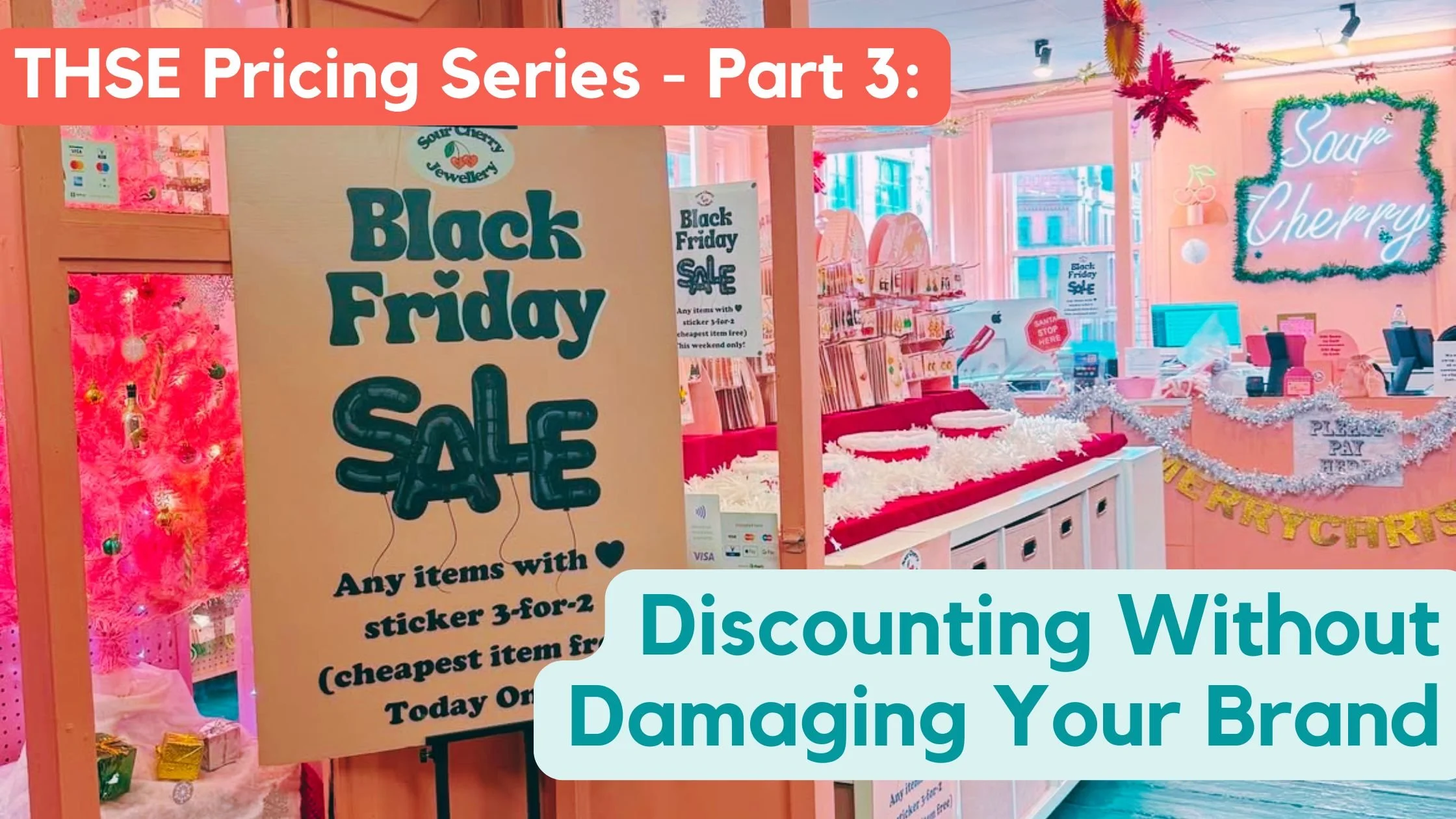
If there’s one piece of advice I find myself giving retailers time and time again, it’s this…
Don’t make discounting your first solution.
It’s understandable. Sales have slowed, the weather hasn’t helped, cash flow is tight or you’ve got stock that isn’t moving. The temptation is to reach for the red sale stickers.
But before you do, ask yourself one question:
Is it the price that’s the problem… or is it something else?
Quite often, customers aren’t walking away because something costs too much.
They’re walking away because they don’t yet understand its value.
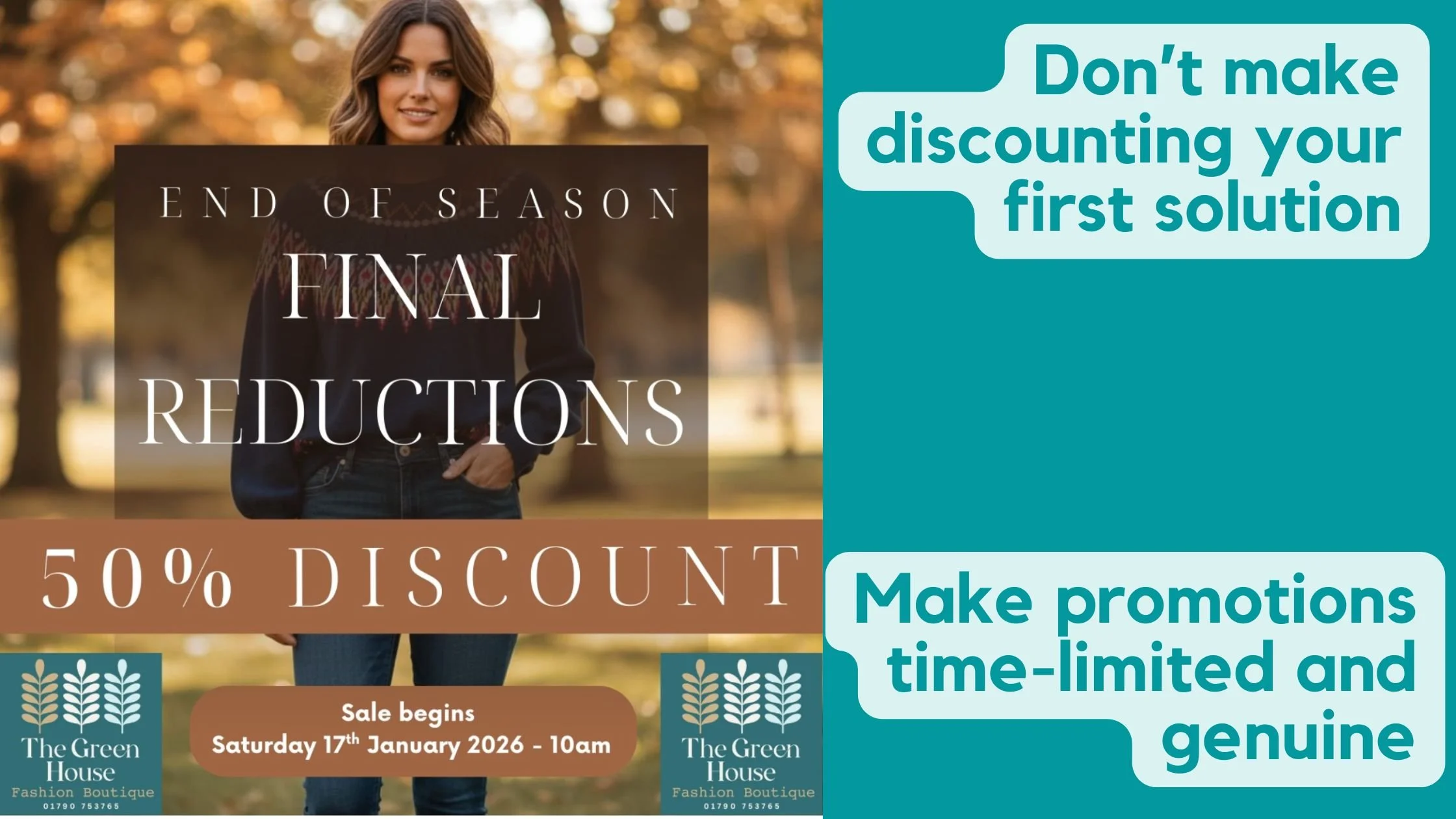
Every discount costs you
Let’s look at a simple example.
Imagine you sell a gift for £40 and make a healthy margin on it.
Offer 20% off and you’ve immediately reduced the selling price to £32.
That £8 isn’t just disappearing from the price tag - it’s disappearing from your profit.
Now multiply that across twenty or thirty sales.
That’s a significant amount of money you’ve given away.
Before launching a promotion, work out exactly what it will cost your business, not just how many extra sales you hope it might generate.
Train customers to buy… or to wait?
One of the biggest dangers of constant discounting is the habit it creates.
If customers know you reduce prices every few weeks, why would they pay full price today?
We’ve all seen shops where the sale signs never seem to come down.
Eventually, customers stop believing the original price altogether.
Your full price becomes meaningless because everyone expects a discount.
That’s not a position any independent retailer wants to be in.
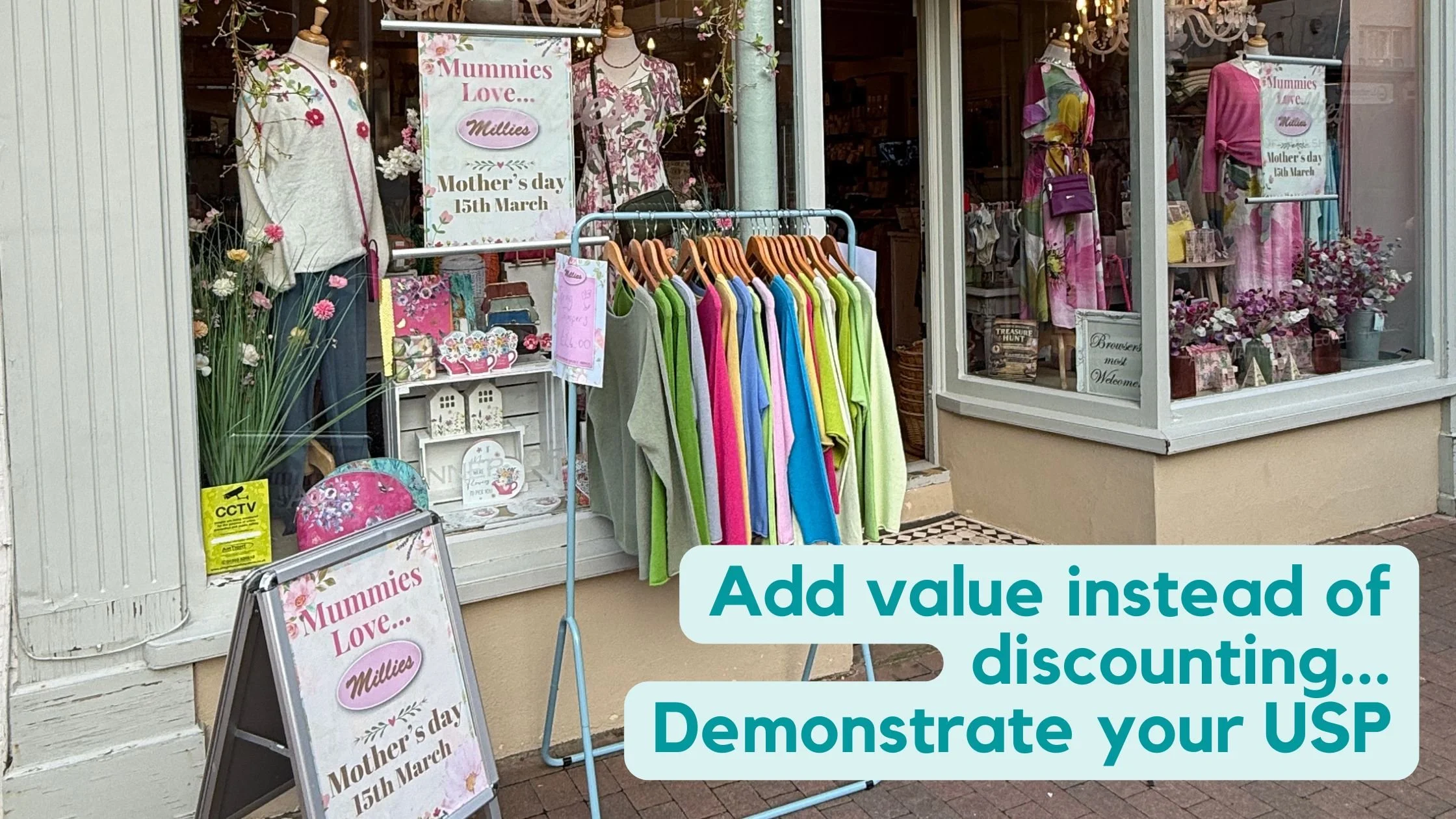
Add value instead
Rather than reducing your price, think about increasing the value.
Could you:
Gift wrap the purchase for free?
Include a handwritten thank-you card?
Bundle complementary products together?
Offer free local delivery over a certain spend?
Share the story behind the maker or product?
Create a limited edition display or exclusive collection?
Often these ideas cost very little but increase the customer’s perception of value far more than knocking a few pounds off.
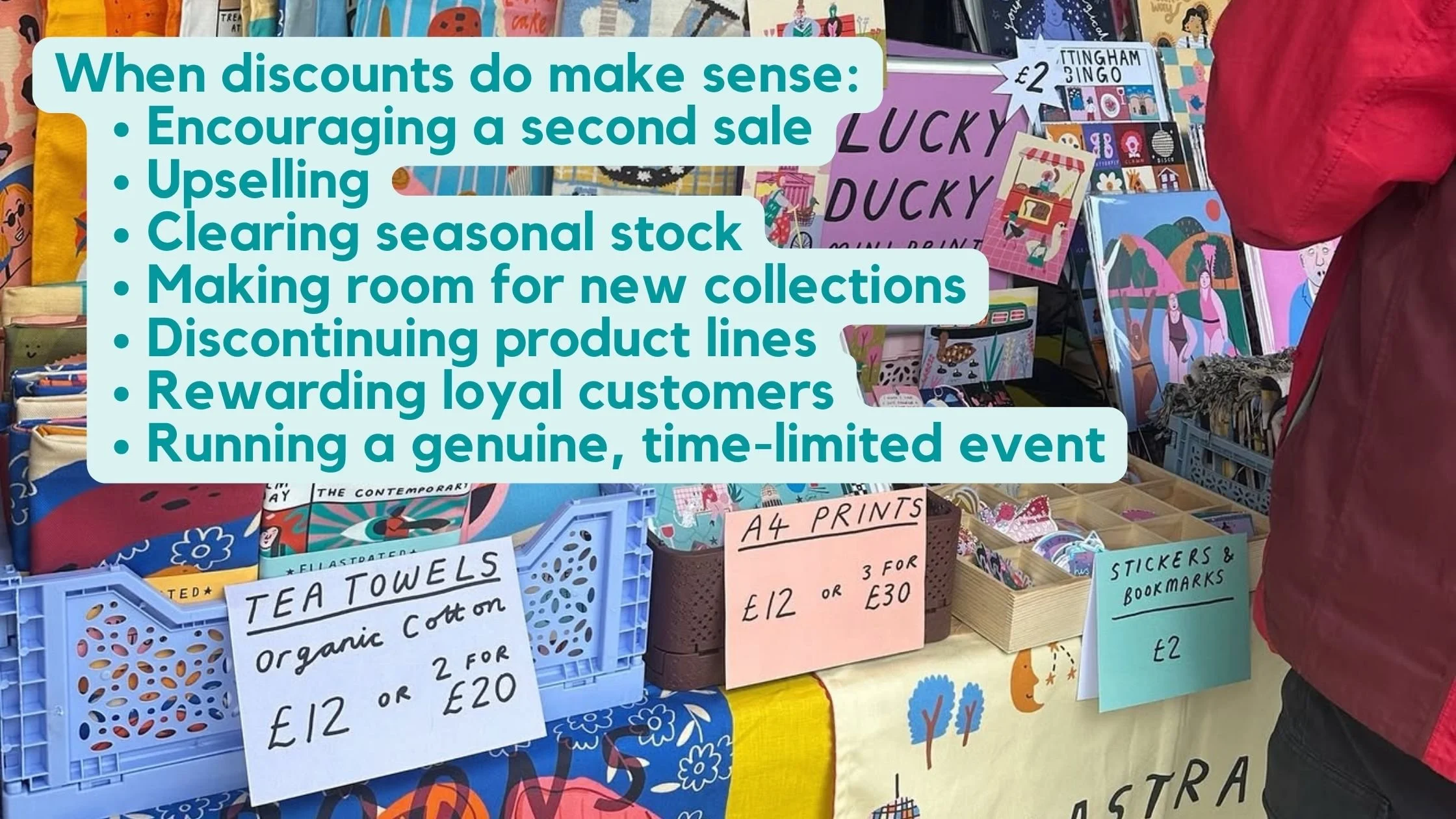
When discounts do make sense
Of course, we’re not saying never discount.
There are times when promotions are absolutely the right decision.
For example:
Encouraging a second sale
Clearing seasonal stock.
Making room for new collections.
Discontinuing product lines.
Rewarding loyal customers.
Running a genuine, time-limited event.
The key word is genuine.
Customers are incredibly good at spotting a fake sale.
If everything is always “reduced”, nothing really is.
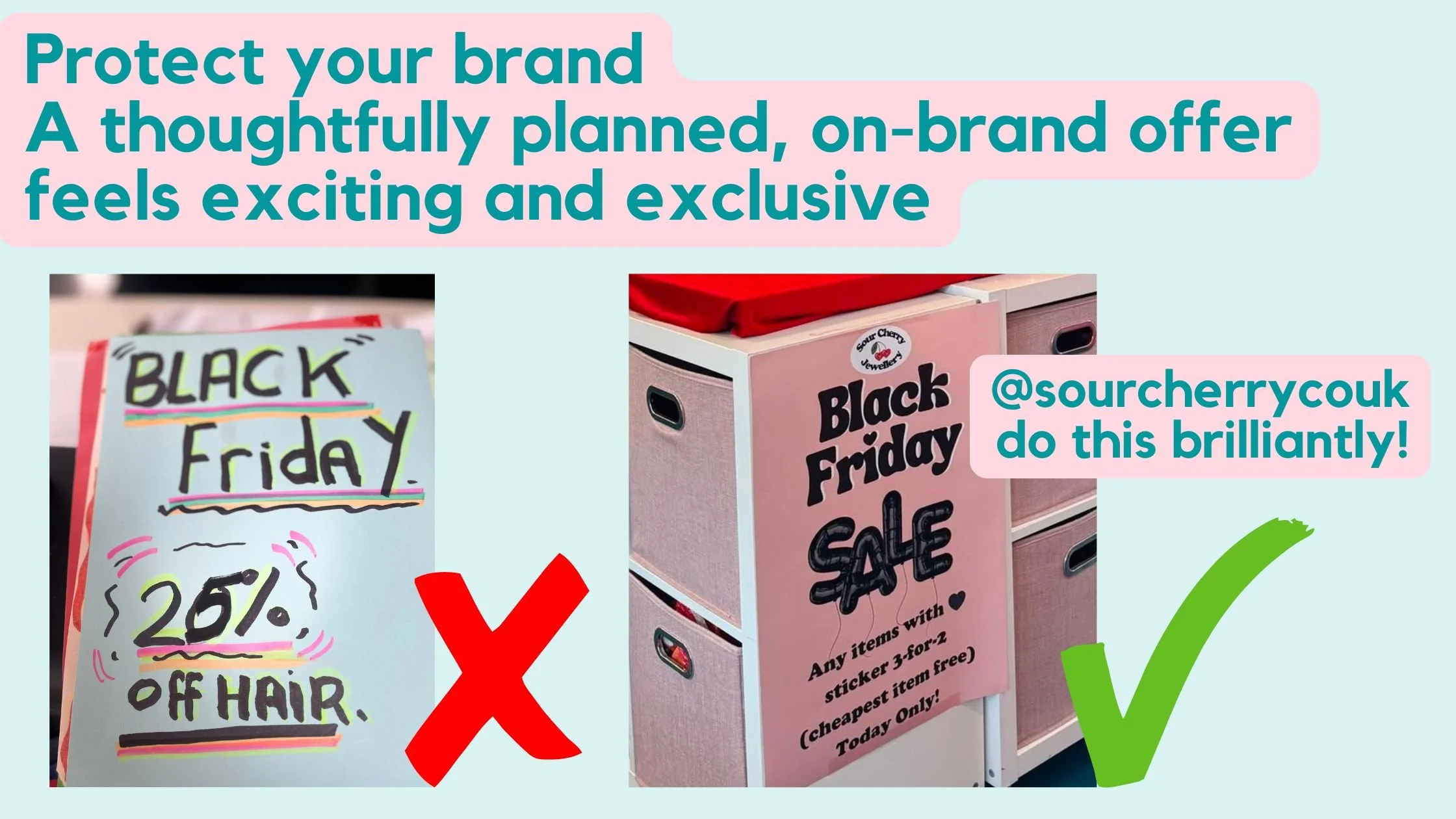
Protect your brand
As Wendy often reminds me, every promotion says something about your brand.
A thoughtfully planned offer feels exciting and exclusive.
A constant stream of discounts can make customers question the quality of your products or wonder why they should ever pay full price.
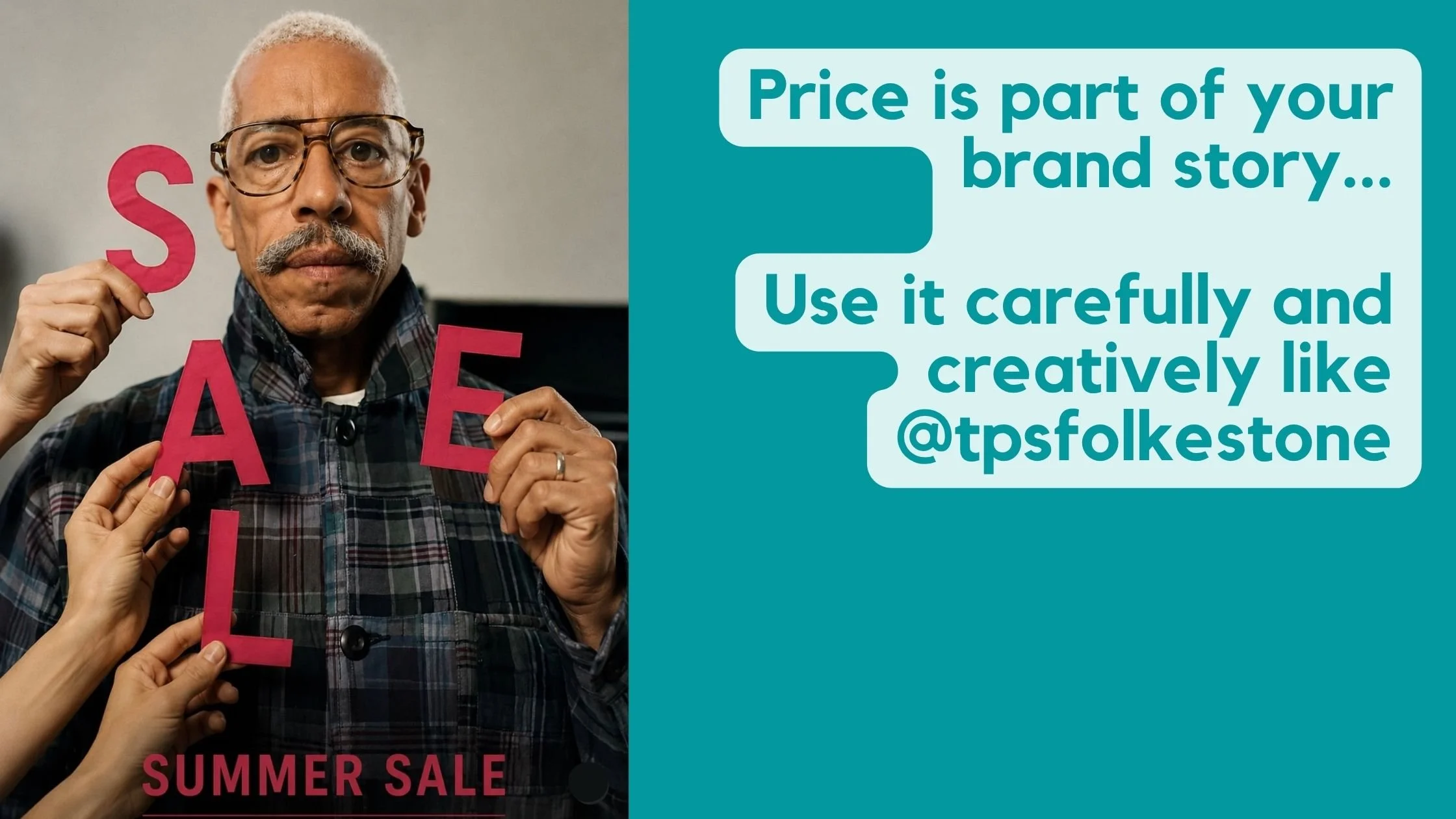
Price is part of your brand story.
Use it carefully.
THSE Top Tips
Discount with a purpose - not out of panic.
Always calculate how much profit you’re giving away.
Add value before reducing price.
Make promotions time-limited and genuine.
Reward loyal customers rather than training everyone to wait for a sale.
Remember that your pricing sends a message about your brand.
Final Thoughts
Independent retailers work incredibly hard to source beautiful products, create welcoming shops and deliver outstanding customer service.
Don’t undervalue all that effort by assuming price is your only selling tool.
Sometimes the answer isn’t to charge less.
It’s to communicate your value better.
As we often say at THSE…
A well-told story is worth far more than a yellow discount sticker.
Ophelia
The High Street Experts